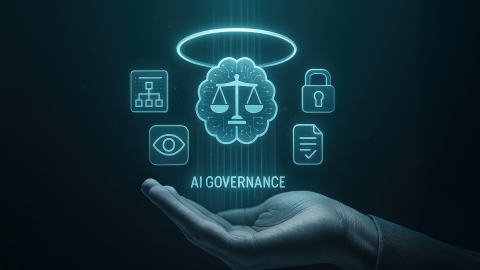
The EU AI Act is the world's first comprehensive AI regulation. It is not an obstacle but a framework that makes AI safe and trustworthy — and it pays to prepare now, not only when forced.
A risk-based approach
The AI Act classifies systems by risk: prohibited, high-risk, limited-risk and minimal-risk. Obligations grow with the risk. The first step is to identify which category your systems fall into.
High-risk obligations
High-risk systems require risk management, data quality assurance, documentation, human oversight and cybersecurity. These are not optional — they must be built into the solution.
Transparency and documentation
Users must know when they are interacting with AI. For every model, maintain documentation: what it is used for, what data it was trained on and how it is monitored.
A human in the loop
Automated decision-making without human oversight is a risk to both business and compliance. Build processes so a person can review and, where needed, override the model's decisions.
Prepare now
Retrofitting compliance is expensive and slow. When you build a governance framework from the start — oversight, documentation and audit trails — you meet the requirements and can scale safely.
Roles and responsibilities
Define who is responsible for model approval, oversight and audit. Clear roles are the foundation of compliance.
Documentation in practice
Maintain technical documentation for every model: purpose, data, limitations and oversight. This is both a legal requirement and good practice.
Ongoing oversight
Regulation does not end at deployment. Track models in production, document changes and act on anomalies.
Assessing vendors
If you use third-party models, ensure they meet the requirements too. Accountability stays with you.
Ready to adopt AI?
Book a free discovery call — we review your opportunities with no commitment.
Book a meeting →